
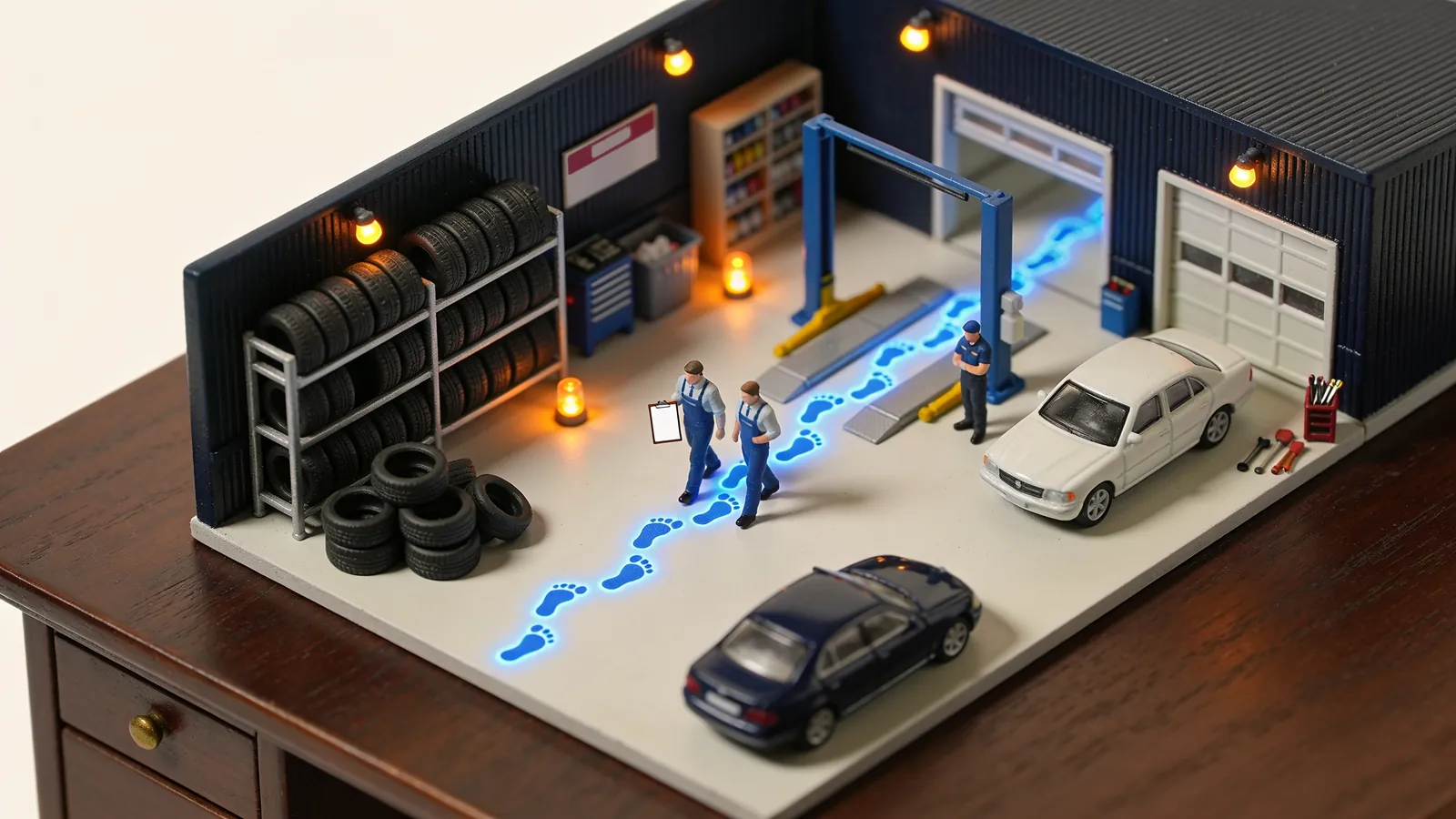
// Tool 13
Waste Walk (7 Wastes)
Walk the same floor you walk every day — but this time, count what's actually being wasted.
Waiting & delaysWhat it is and when to use it
Waste hides in plain sight because everyone on the floor has stopped seeing it — the extra trip to fetch a part, the stack of work-in-process waiting between two steps, feels normal because it's always been there. A waste walk is a structured pass through the process, category by category — overproduction, waiting, transport, overprocessing, inventory, motion, defects, and unused talent — that names each instance on the spot instead of relying on memory back in an office. It turns a vague sense that “we could be more efficient” into a specific, countable list ranked by what's actually costing the most.
Worked example

Click or tap the plate to enlarge it.
What goes on the sheet
- Area/process walked, date, who walked it (ideally cross-functional, not one person alone)
- One row per waste category (the 7 wastes, plus unused talent as the 8th)
- Specific instance observed per category: what, where, how often
- Estimated impact: time, distance, or units affected, with the basis for the estimate noted
- Photo or sketch evidence for each instance, where practical
- Priority ranking across all instances found, by estimated impact
- Owner and next step assigned to the top few, not the entire list
In a business like yours
- Tire shop: timing the walks between rack, bay and parts room shows the minutes lost every shift.
- Restaurant: extra steps between prep, line and walk-in counted during a real service.
- Office: forms printed, signed, scanned and typed again — the same waste, on paper.
Illustrative examples, not client cases.
// Talk to David
This is one of the 19 tools in our loss diagnostic.
In the diagnostic we pick the ones that fit your leak and put a dollar figure on what it costs you. 30 minutes to see if it makes sense.
// Waiting & delays
Same leak
 // Tool 01
Value Stream Map (VSM)
See how much of your lead time is real work — and how much is waiting.
Waiting & delays
 // Tool 06
Kanban / Pull Board
Stop guessing what to make next — let what's actually being used tell you.
Waiting & delays
 // Tool 18
TOC Five Focusing Steps
Improving everything that isn't the bottleneck doesn't move your output — it just moves the queue.
Waiting & delays