
// Tool 14
Poka-Yoke Design Worksheet
The best fix for human error isn't a warning sign — it's making the error physically impossible.
Mistakes & reworkWhat it is and when to use it
Telling someone to “be more careful” doesn't survive a busy shift, a new hire, or hour ten of a long day — the same mistake comes back. Poka-yoke works through error-proofing designed at three levels: prevention (the error can't physically happen), detection (it's caught before it moves to the next step or the customer), and alert (it's flagged so a person can act). This worksheet walks a failure mode through the three levels in order, because most fixes stop at the cheapest one — an alert — when a prevention-level fix was available for not much more.
Worked example

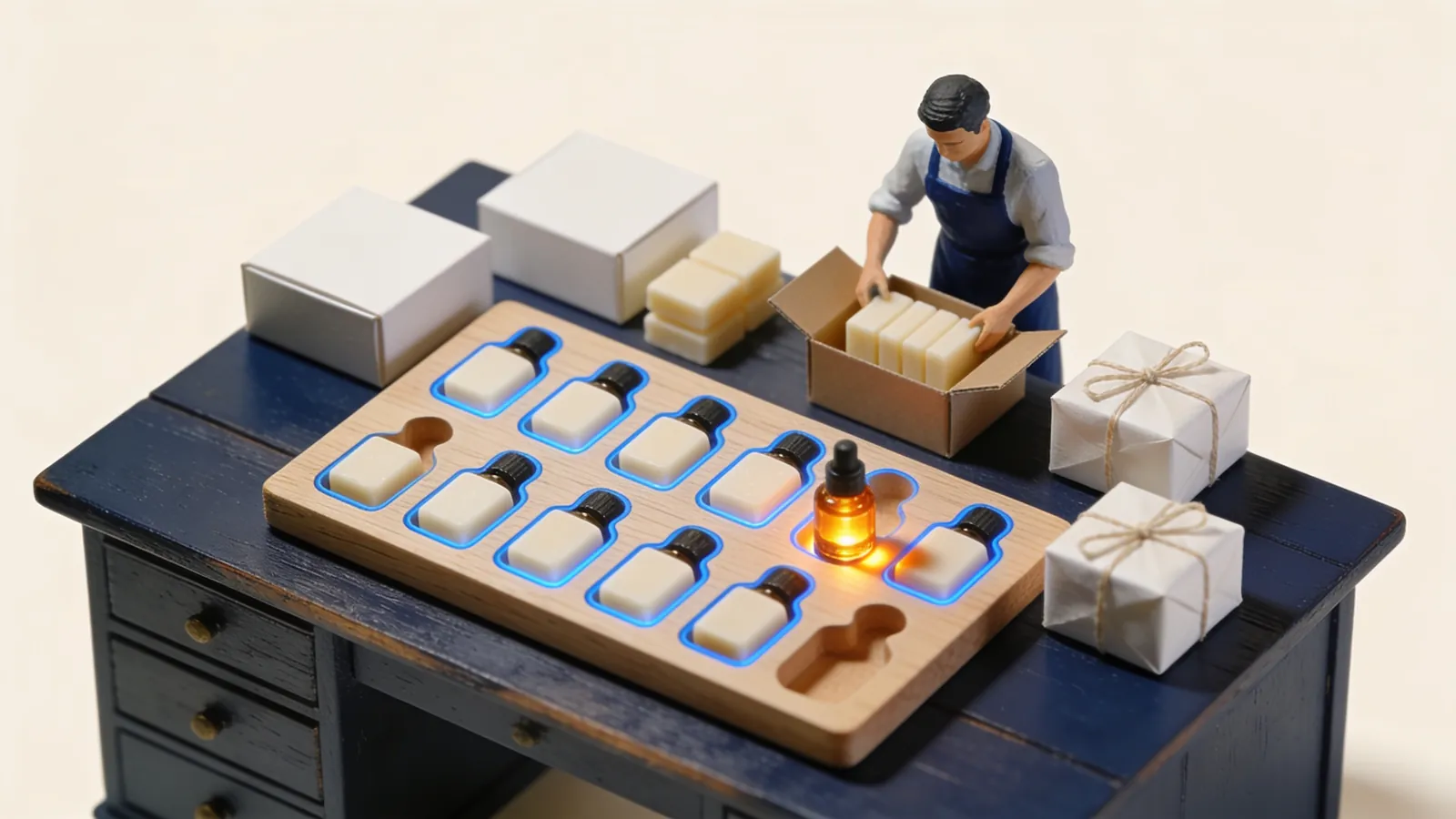
Click or tap the plate to enlarge it.
What goes on the sheet
- Failure mode: the specific error being designed against, and how often it currently occurs
- Current control level, if any (none / alert / detection / prevention)
- Prevention option considered: can the error be made physically impossible, and at what cost
- Detection option considered: how the error would be caught before the next step, and at what cost
- Alert option considered: what signal would flag it, and who's responsible for acting on it
- Level selected, and the reason it was chosen over a higher level (cost, feasibility — stated explicitly)
- Verification: how the fix will be tested to confirm the failure mode is actually prevented, not just less frequent
In a business like yours
- Soap or gift-box company: a shaped tray makes the wrong product physically impossible to pack.
- Pharmacy counter: look-alike items stored apart and scanned before bagging.
- Installer crew: a checklist that cannot be closed until a photo of each step is attached.
Illustrative examples, not client cases.
// Talk to David
This is one of the 19 tools in our loss diagnostic.
In the diagnostic we pick the ones that fit your leak and put a dollar figure on what it costs you. 30 minutes to see if it makes sense.
// Mistakes & rework
Same leak
 // Tool 08
Fishbone Diagram (Ishikawa)
Before you fix anything, get every possible cause on the table — not just the first one someone blames.
Mistakes & rework
 // Tool 09
5 Whys Root Cause Worksheet
If your last five whys all end at “the employee should have been more careful,” you didn't find the cause — you found someone to blame.
Mistakes & rework
 // Tool 10
Pareto Chart Worksheet
Most operations have one or two causes doing most of the damage — find them before you spread the budget thin.
Mistakes & rework