

// Tool 09
5 Whys Root Cause Worksheet
If your last five whys all end at “the employee should have been more careful,” you didn't find the cause — you found someone to blame.
Mistakes & reworkWhat it is and when to use it
Asking “why” once gets you a symptom. Asking it five times, each answer checked against what actually happened on the floor rather than assumed from a desk, gets you to something a policy, a design, or a maintenance decision actually caused — and that's the level where a fix sticks. The worksheet forces each step to cite evidence, not opinion, and it's a red flag if every chain ends the same convenient way, at the person doing the work.
Worked example

Click or tap the plate to enlarge it.
What goes on the sheet
- Problem statement: specific, with date, location, and measured impact
- Why #1 through why #5 (or however many it takes), each one a cause, not a restatement of the problem
- Evidence source for each “why”: what was checked on the floor, who confirmed it, when
- Point where the chain stops being about an event and starts being about a system (design, policy, standard)
- Root cause selected for action, and who validated it wasn't just the first plausible answer
- Corrective action tied explicitly to the root cause found, with owner and date
In a business like yours
- Flower shop: a missed delivery traced back to a pickup cutoff nobody ever wrote down.
- Auto repair: a comeback traced to a missing torque step, not to a careless mechanic.
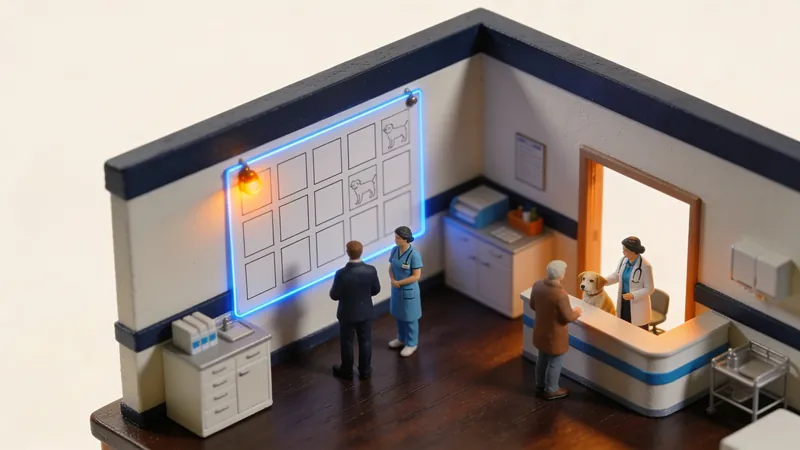
- Clinic front desk: double bookings traced to two calendars that do not talk to each other.
Illustrative examples, not client cases.
// Talk to David
This is one of the 19 tools in our loss diagnostic.
In the diagnostic we pick the ones that fit your leak and put a dollar figure on what it costs you. 30 minutes to see if it makes sense.
// Mistakes & rework
Same leak
 // Tool 08
Fishbone Diagram (Ishikawa)
Before you fix anything, get every possible cause on the table — not just the first one someone blames.
Mistakes & rework
 // Tool 10
Pareto Chart Worksheet
Most operations have one or two causes doing most of the damage — find them before you spread the budget thin.
Mistakes & rework
 // Tool 11
A3 Problem-Solving Sheet
One page that forces the thinking — not a report written after the decision was already made.
Mistakes & rework