
// Tool 15
SMED Changeover Worksheet
Most of a changeover's cost is sequence, not equipment — and that part is free to fix.
Equipment & downtimeWhat it is and when to use it
A long changeover usually isn't long because the machine is slow — it's long because half the setup work that could happen while the machine is still running gets done after it's already stopped. SMED starts by classifying every step of the current changeover as internal (only possible with the machine down) or external (can be prepped in advance), then converts as many internal steps to external as possible, before touching a single tool or spending on automation. Most of the time saved comes from that sequencing work alone — it's organizational, not capital.
Worked example

Click or tap the plate to enlarge it.
What goes on the sheet
- Changeover being studied: from what product/setup to what, on which equipment
- Full step-by-step log of the current changeover, timed, in the order it actually happens
- Classification of each step: internal (machine must be stopped) or external (can be done running)
- Steps identified for conversion from internal to external, and what's needed to make that happen
- Steps identified for simplification: eliminating adjustment (stops/positioning), one-motion fasteners
- New sequence with internal-only steps, and the projected changeover time
- Actual time after implementation, measured against the baseline — not estimated
In a business like yours
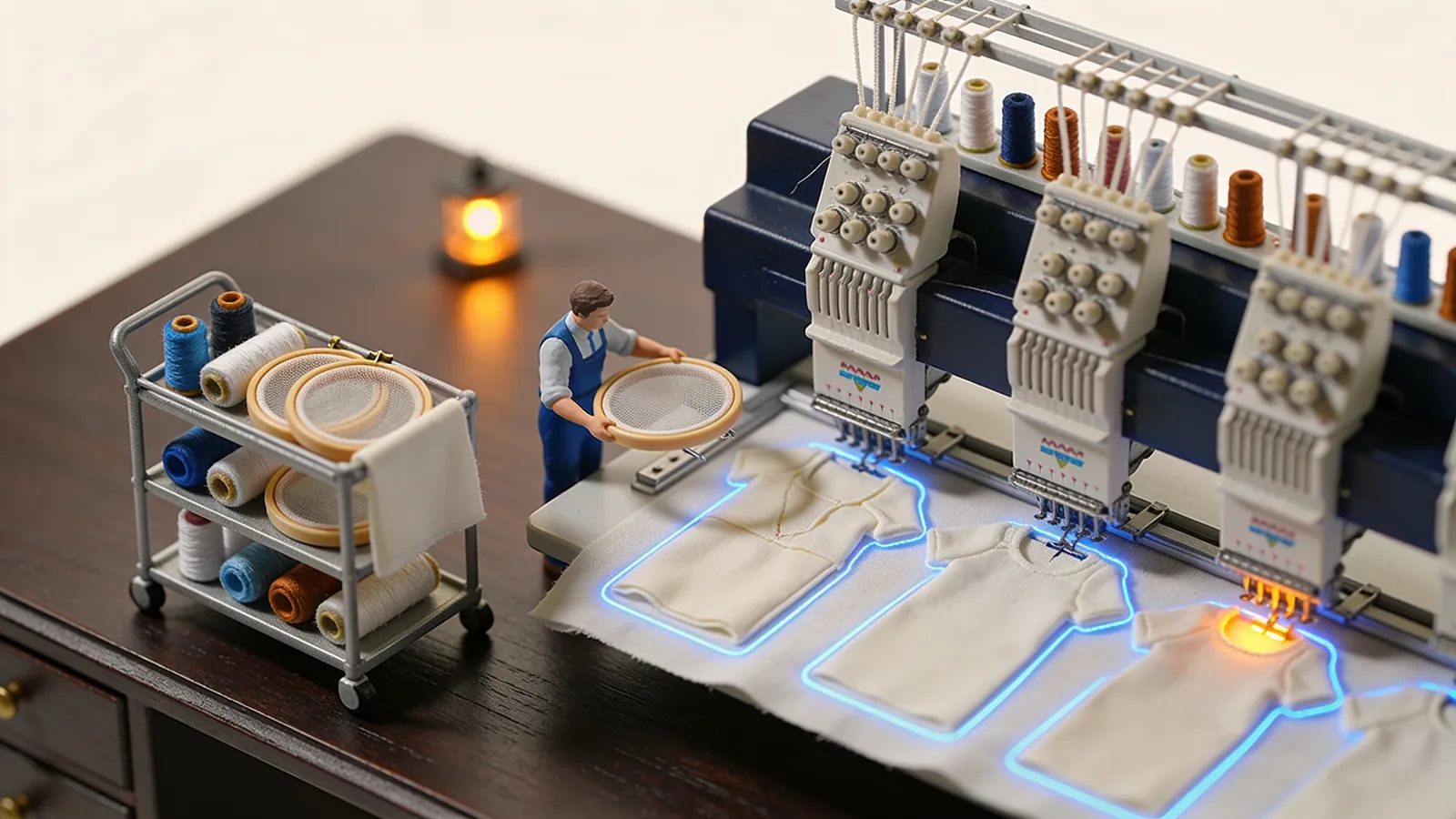
- Embroidery shop: threads, hoops and garments staged on a cart before the machine stops.
- Restaurant: the switch from lunch to dinner prep planned so the line is never idle.
- Print shop: plates and inks ready before the press stops, so changeovers shrink.
Illustrative examples, not client cases.
// Talk to David
This is one of the 19 tools in our loss diagnostic.
In the diagnostic we pick the ones that fit your leak and put a dollar figure on what it costs you. 30 minutes to see if it makes sense.
// Equipment & downtime
Same leak
 // Tool 02
Autonomous Maintenance (CILR) Calendar
Most “sudden” breakdowns had a warning days earlier.
Equipment & downtime
 // Tool 05
OEE Dashboard
Equipment that's “on” isn't the same as equipment that's producing.
Equipment & downtime
 // Tool 12
Andon / Visual Workplace Board
A problem anyone can flag and everyone can see gets fixed today, not next month.
Equipment & downtime