
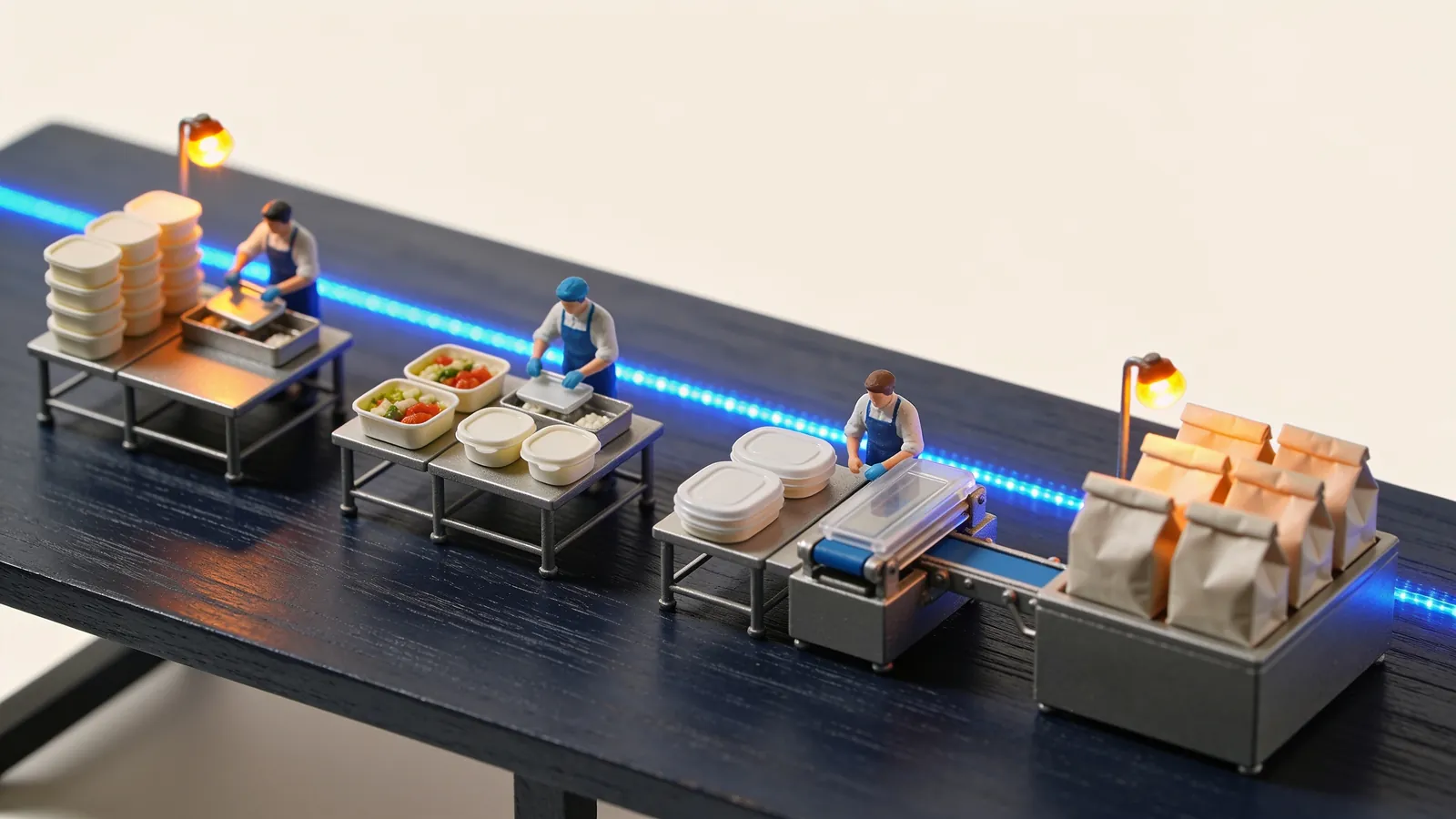
// Tool 19
Takt Time vs. Cycle Time
Running fast doesn't mean running at the right speed — it might just mean building inventory nobody ordered yet.
Waiting & delaysWhat it is and when to use it
A line or a team can look busy and still be badly out of sync with what customers actually need, because “fast” and “right speed” aren't the same thing. Takt time is the pace demand requires — available time divided by customer demand for that period; cycle time is how long the process actually takes per unit. Comparing the two, station by station, shows exactly where you're the bottleneck (cycle slower than takt) and where you're overstaffed or overbuilding (cycle much faster than takt) — the same diagnosis works for a service counter or a booking calendar as it does for a production line.
Worked example

Click or tap the plate to enlarge it.
What goes on the sheet
- Available production/service time for the period (shift length minus planned breaks/stops)
- Customer demand for that same period, and its source (order history, bookings — dated)
- Takt time calculation: available time ÷ demand
- Cycle time measured per step/station, actual (timed), not the rated/catalog speed
- Comparison chart: cycle time vs. takt time, station by station
- Stations where cycle exceeds takt (bottleneck) flagged for rebalancing or capacity action
- Stations where cycle is well under takt flagged for possible reallocation, not just left idle
In a business like yours
- Meal-prep company: demand sets the pace per box, and each station is balanced to it.
- Coffee shop: drinks per hour in the morning rush against how long each drink really takes.
- Assembly bench: the fast station stops overbuilding and helps the slow one.
Illustrative examples, not client cases.
// Talk to David
This is one of the 19 tools in our loss diagnostic.
In the diagnostic we pick the ones that fit your leak and put a dollar figure on what it costs you. 30 minutes to see if it makes sense.
// Waiting & delays
Same leak
 // Tool 01
Value Stream Map (VSM)
See how much of your lead time is real work — and how much is waiting.
Waiting & delays
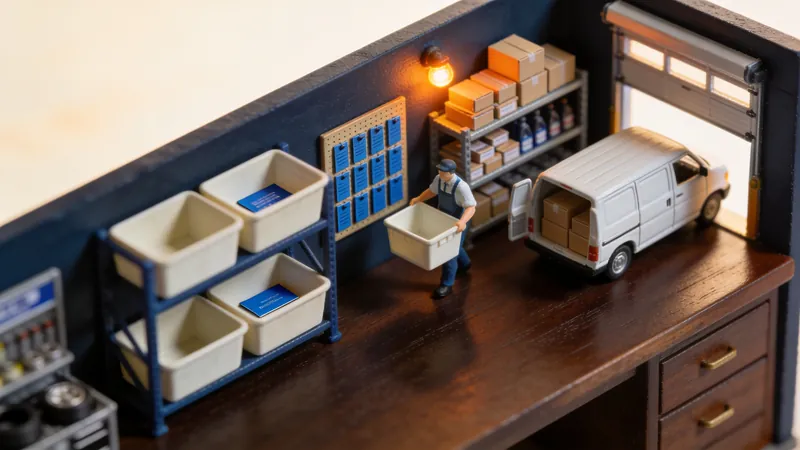 // Tool 06
Kanban / Pull Board
Stop guessing what to make next — let what's actually being used tell you.
Waiting & delays
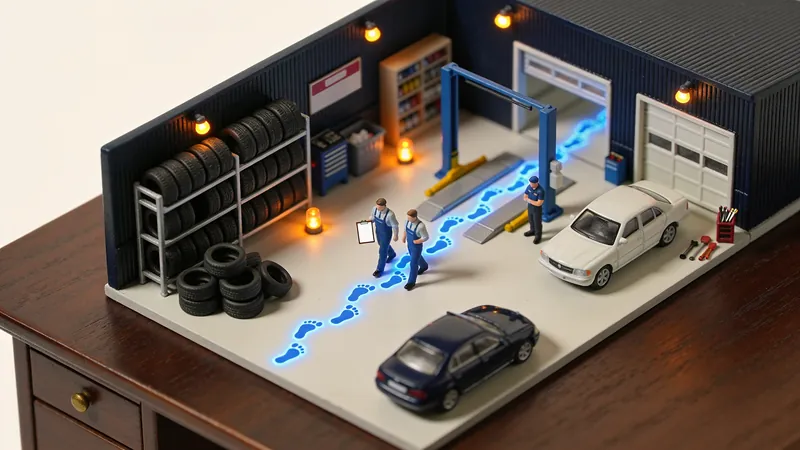 // Tool 13
Waste Walk (7 Wastes)
Walk the same floor you walk every day — but this time, count what's actually being wasted.
Waiting & delays