
// Tool 11
A3 Problem-Solving Sheet
One page that forces the thinking — not a report written after the decision was already made.
Mistakes & reworkWhat it is and when to use it
Most “root cause” write-ups get built backward: the fix is already decided, and the analysis gets typed up afterward to justify it. An A3 is built the other way — one page that walks context, current state, target, root cause analysis, countermeasures, plan, and a follow-up check, in that order, so a reader can see exactly where the reasoning happened and disagree with a specific step instead of the whole conclusion. The single sheet is a side effect; the real product is the thinking that had to happen to fill it in honestly.
Worked example

Click or tap the plate to enlarge it.
What goes on the sheet
- Background: why this problem matters now, and which business objective it connects to
- Current state: the process today, with real data — not the version that makes the team look good
- Target: specific, measurable, dated
- Root cause analysis: the reasoning shown (fishbone, 5 whys, Pareto), not just a stated conclusion
- Countermeasures, each one explicitly linked to a specific root cause, not a general fix
- Implementation plan: who, what, by when, broken into verifiable actions
- Follow-up: how and when the result gets checked again to confirm it held — not just that it was implemented
In a business like yours
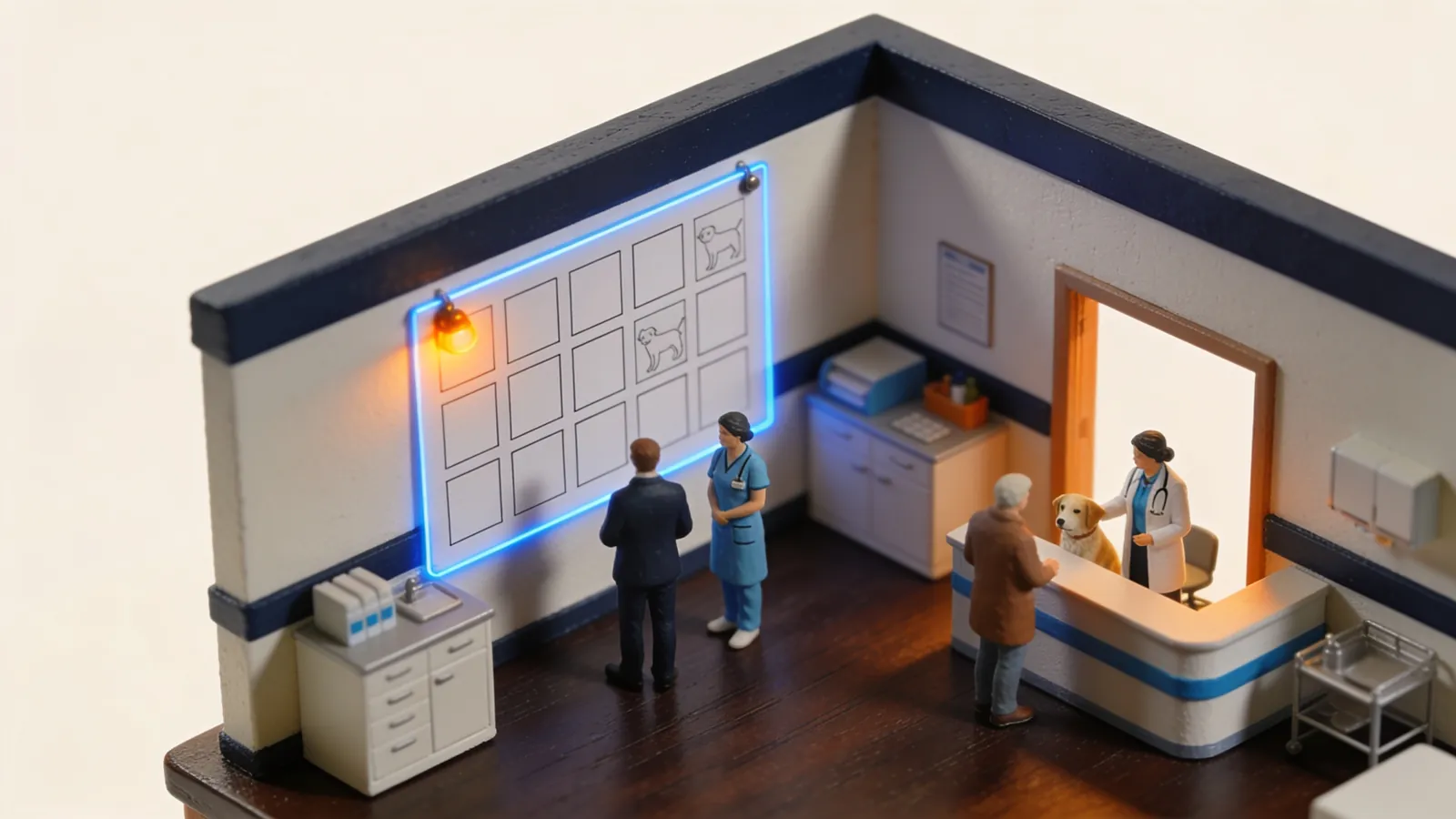
- Veterinary clinic: appointments that run late explained on one page, from current state to countermeasures and a check date.
- Distributor: a two-day delivery promise against five real days, and the three changes that close the gap.
- Landscaping company: one sheet the whole crew can read, instead of a long email thread.
Illustrative examples, not client cases.
// Talk to David
This is one of the 19 tools in our loss diagnostic.
In the diagnostic we pick the ones that fit your leak and put a dollar figure on what it costs you. 30 minutes to see if it makes sense.
// Mistakes & rework
Same leak
 // Tool 08
Fishbone Diagram (Ishikawa)
Before you fix anything, get every possible cause on the table — not just the first one someone blames.
Mistakes & rework
 // Tool 09
5 Whys Root Cause Worksheet
If your last five whys all end at “the employee should have been more careful,” you didn't find the cause — you found someone to blame.
Mistakes & rework
 // Tool 10
Pareto Chart Worksheet
Most operations have one or two causes doing most of the damage — find them before you spread the budget thin.
Mistakes & rework